
During our online satsang session with Dr. Mark Dyczkowski last Sunday (March 9th 2014), we were given some fantastic meditative practices around Sauh and SoHam Mantras. He also stressed on the importance of breath and how and why we must bring attention to the breath. When he mentioned this, I couldn’t help but recall that we cannot speak while we inhale. Just try saying something while inhaling – it is impossible. This connects to the deep Trika concept of breadth and the flow of Prana and Apana.
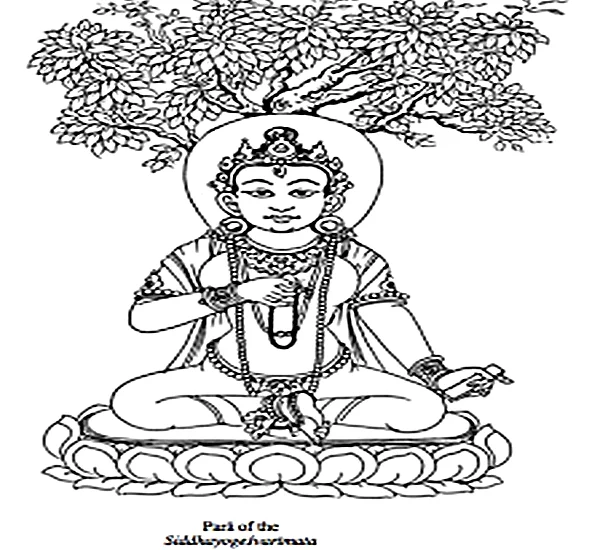
Markji also highlighted the concept of chief Goddesses of Trika – Para, Parapara and Apara. A discussion ensued in Facebook. There were also several pictures floating on the net which are primarily sourced (or inspired) from Prof. Sanderson’s original work. So I conferred with Markji and he was very kind to send me his short electronic reply which ( I shared in FB ) is provided at the bottom of this thread. I asked him if it was OK for me to share the goddess pictures from his big book on this site to which he kindly agreed. I felt deeply and was moved by his audacity and love for the scriptures. So with his blessings and kindness, I am sharing the pictures of the goddesses according to SYM, along with a short extract (MBT, KuKh Vol 2.). Please treat and tread with respect and appreciation.
MBT, KuKh Vol 2 – Dr. Mark Dyczkowski
“The Three Goddesses described in the following passages from the Siddhayogeśvarīmata, seated on the prongs of Śiva’s Trident are white, red and yellow-black. They represent, as their colours suggest, the three qualities (guNa) of Nature (prakti) which the one goddess, Mālinī, embodies. Mālinī sits on the middle prong of the Trika Trident. Above her, in her topknot, is an eight-petalled lotus within which is seated the goddess Parā. She is beautiful and brilliant white, ‘like the best crystal and she pours nectar everywhere . . . (She) promotes welfare and bestows success.
The SYM describes Parā as follows:

0 comment